
PRIVM
Lead Product Designer
Live Product
iOS & Android
Retail & Supermarket Operations
Overview
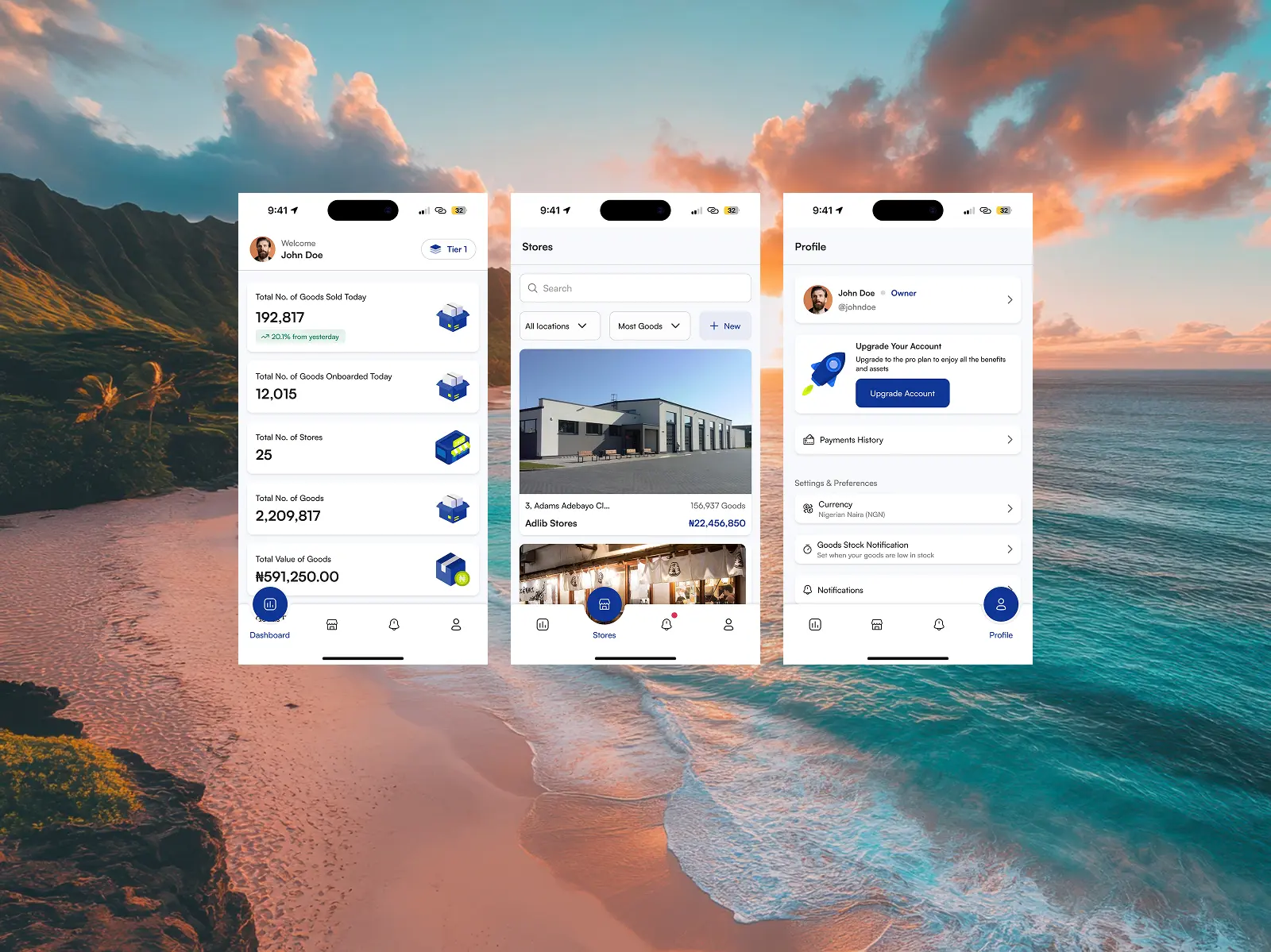
PRIVM is a mobile inventory and retail-operations product designed for store owners who need to understand not only what they have in stock, but what that stock means financially.
I led the product design across multi-store management, inventory transactions, expiry monitoring, team permissions, reporting, and the core operational model that connects stock movement to financial visibility.
The product is now live on both iOS and Android, taking the work from product definition and interface design into a shipped cross-platform mobile product.
The Problem
Retail operators often manage stock, sales, expiry, and staff activity through separate processes. That makes it difficult to understand where losses are occurring, whether stock reductions represent actual sales, and how individual branches are performing.
The design challenge was to turn those disconnected activities into one clear operating model without making everyday stock work feel like accounting software.
Inventory movement ≠ revenue
A product leaving stock may have been sold, expired, damaged, or otherwise disposed of. The system needed to preserve that financial distinction.
Owners need oversight, not every task
Multi-store operators need visibility across branches while allowing managers and storekeepers to run day-to-day operations within clear permission boundaries.
Expiry needs to be actionable
Expiry becomes useful only when operators can see what is at risk, how much capital is affected, and how urgently they need to act.
Different users need different control
Owners, managers, storekeepers, and viewers should not have identical access to inventory and financial actions.
Designing the Operating Model
I structured PRIVM around four connected ideas: each store remains operationally independent, inventory actions carry financial meaning, expiry risk is surfaced before it becomes a loss event, and permissions scale with responsibility.
Owners can manage multiple stores under one account while each branch retains its own goods, users, assets, and reports. That creates centralized visibility without collapsing every branch into the same operational workspace.
Product Decisions
Making risk and performance visible at a glance
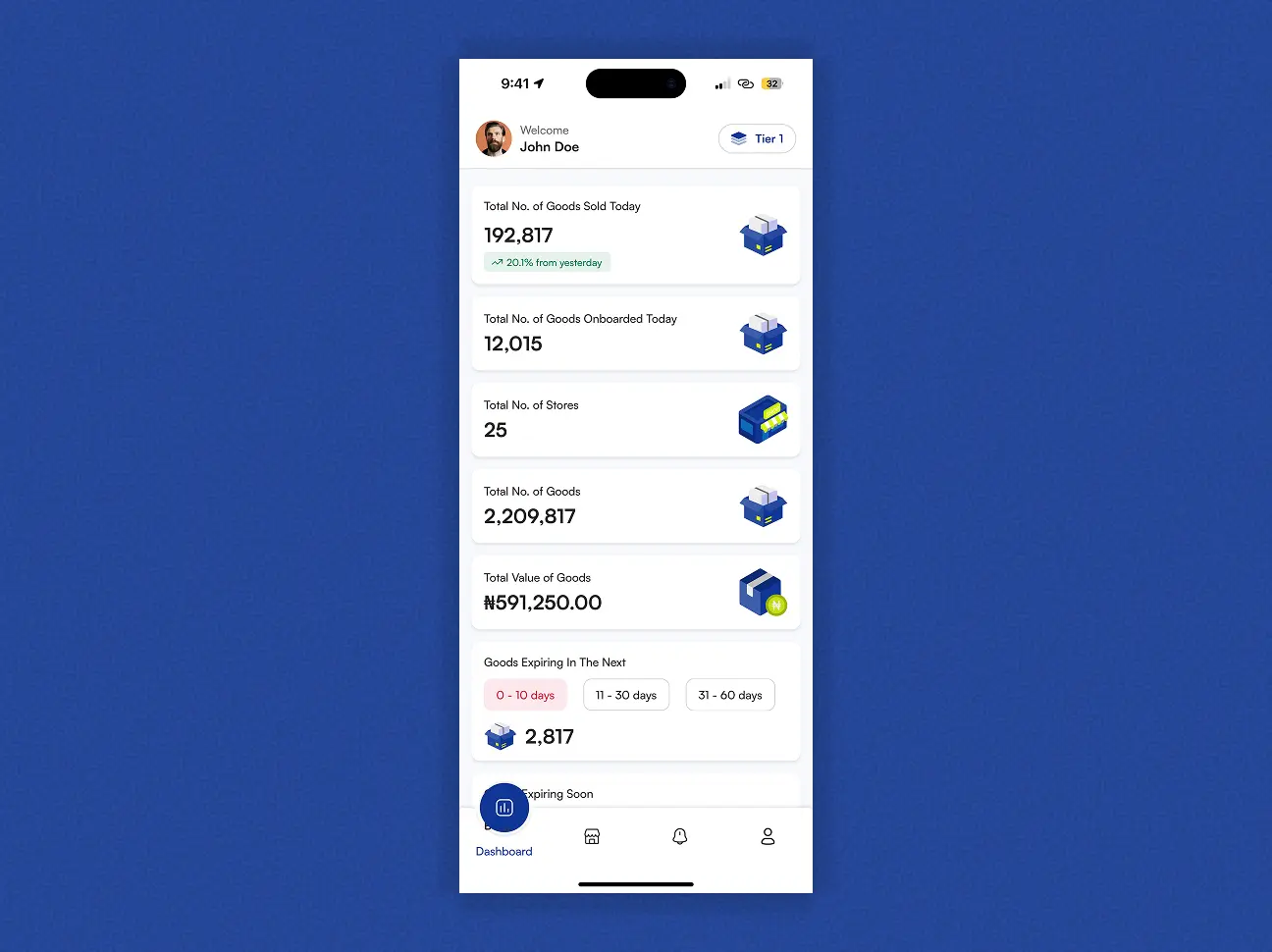
The dashboard prioritizes the information owners need to orient themselves quickly: goods sold, newly onboarded stock, store count, total units, inventory value, and upcoming expiry risk.
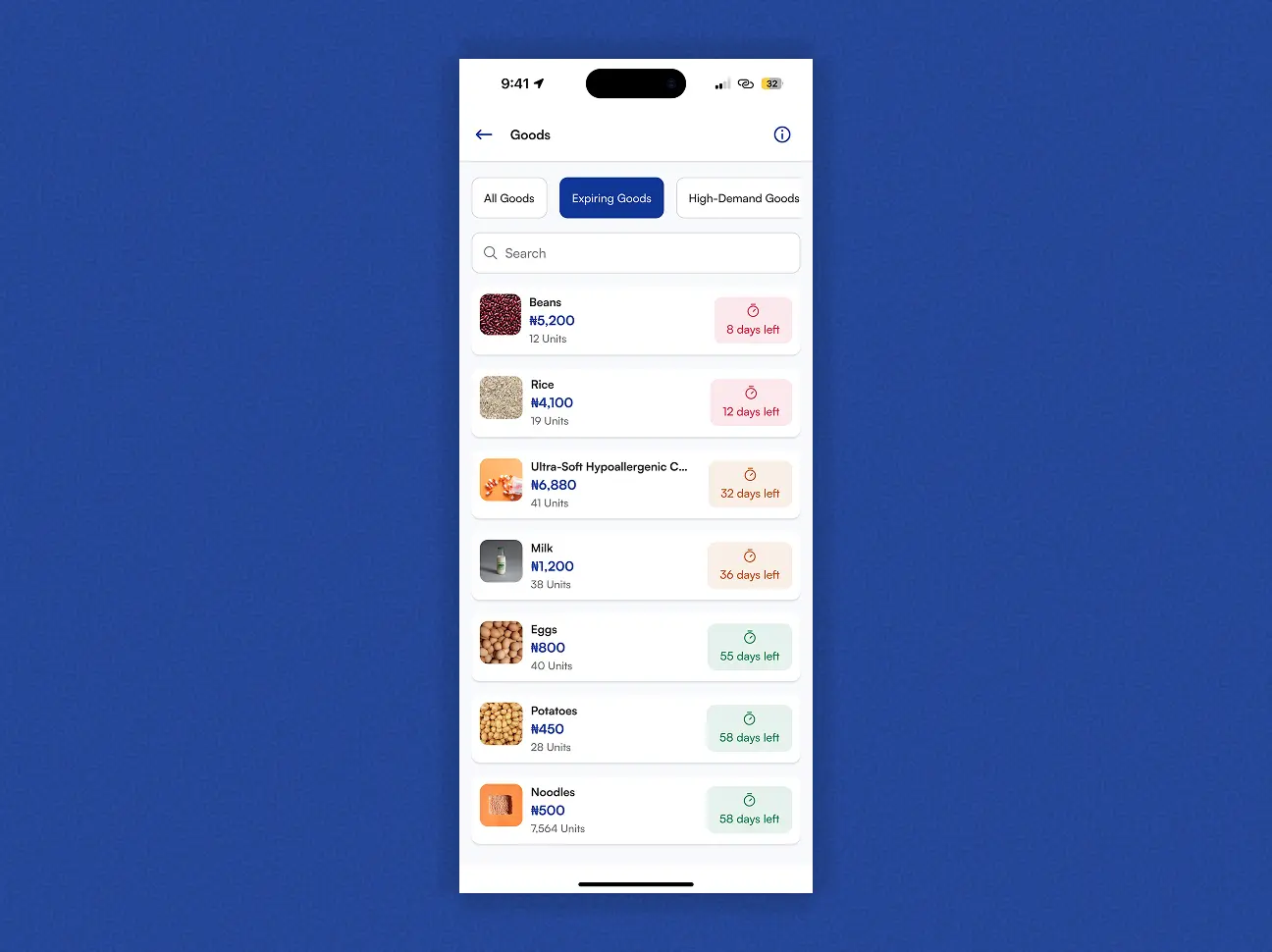
Expiry is surfaced alongside business performance rather than hidden in a separate report. Time ranges and explicit days remaining provide the status signal, while color reinforces urgency instead of carrying meaning on its own.
Separating stock movement from financial movement
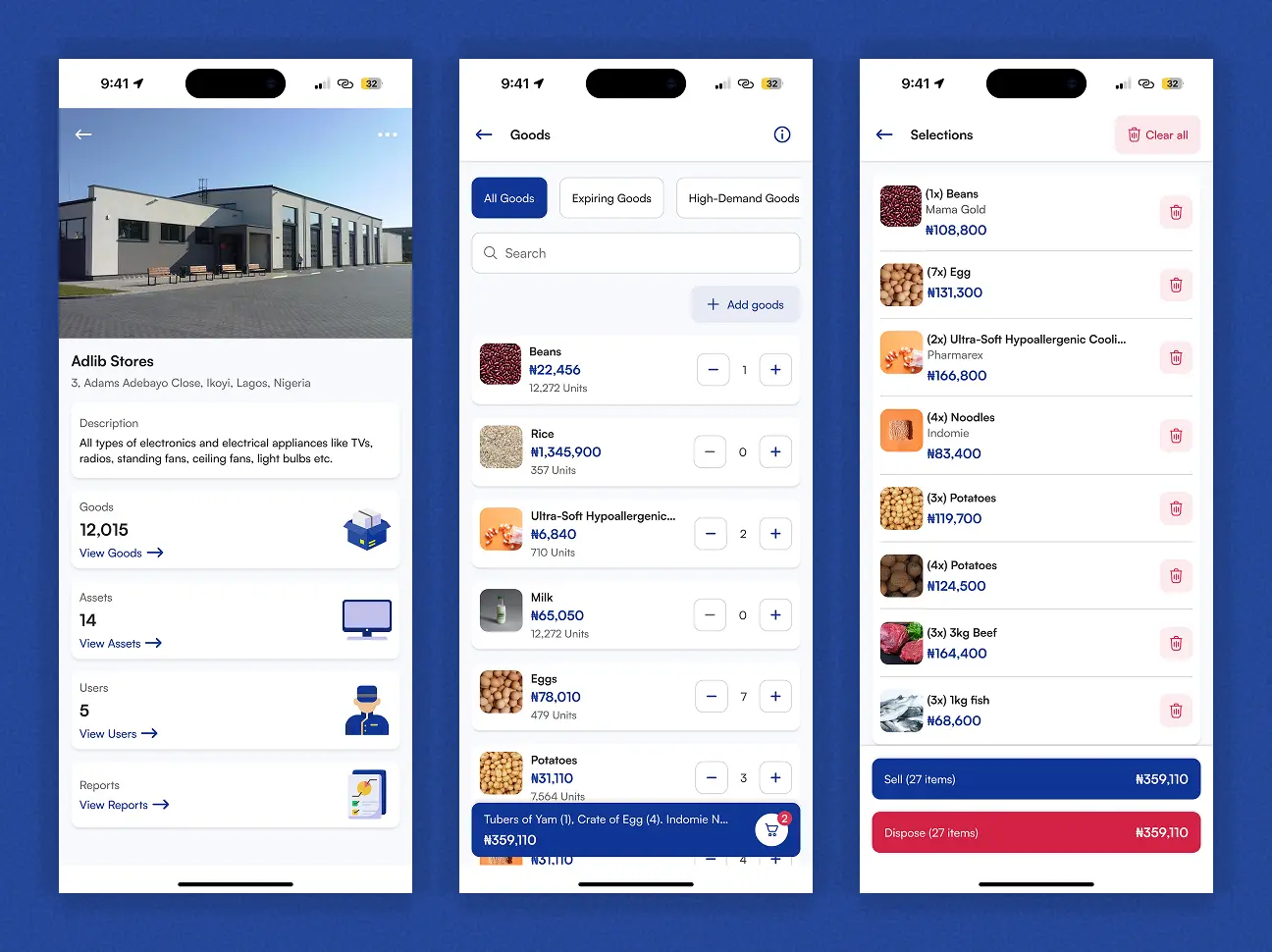
Inventory reduction could not be treated as a single action. A sold item and an expired, damaged, or lost item both reduce stock, but only one represents revenue. Treating them identically would distort store performance.
I separated Sell from Dispose, keeping inventory accurate without falsely inflating revenue. A cart-style batch flow lets staff adjust quantities across multiple products before committing the action.
Turning expiry into an actionable workflow
The expiry view combines the product, unit count, inventory value, and exact time remaining so operators can judge both urgency and financial exposure from the same screen.
Clear timing labels and urgency states help users prioritize which goods require attention first, shifting expiry management from retrospective reporting toward earlier intervention.
Delegating operations without losing control
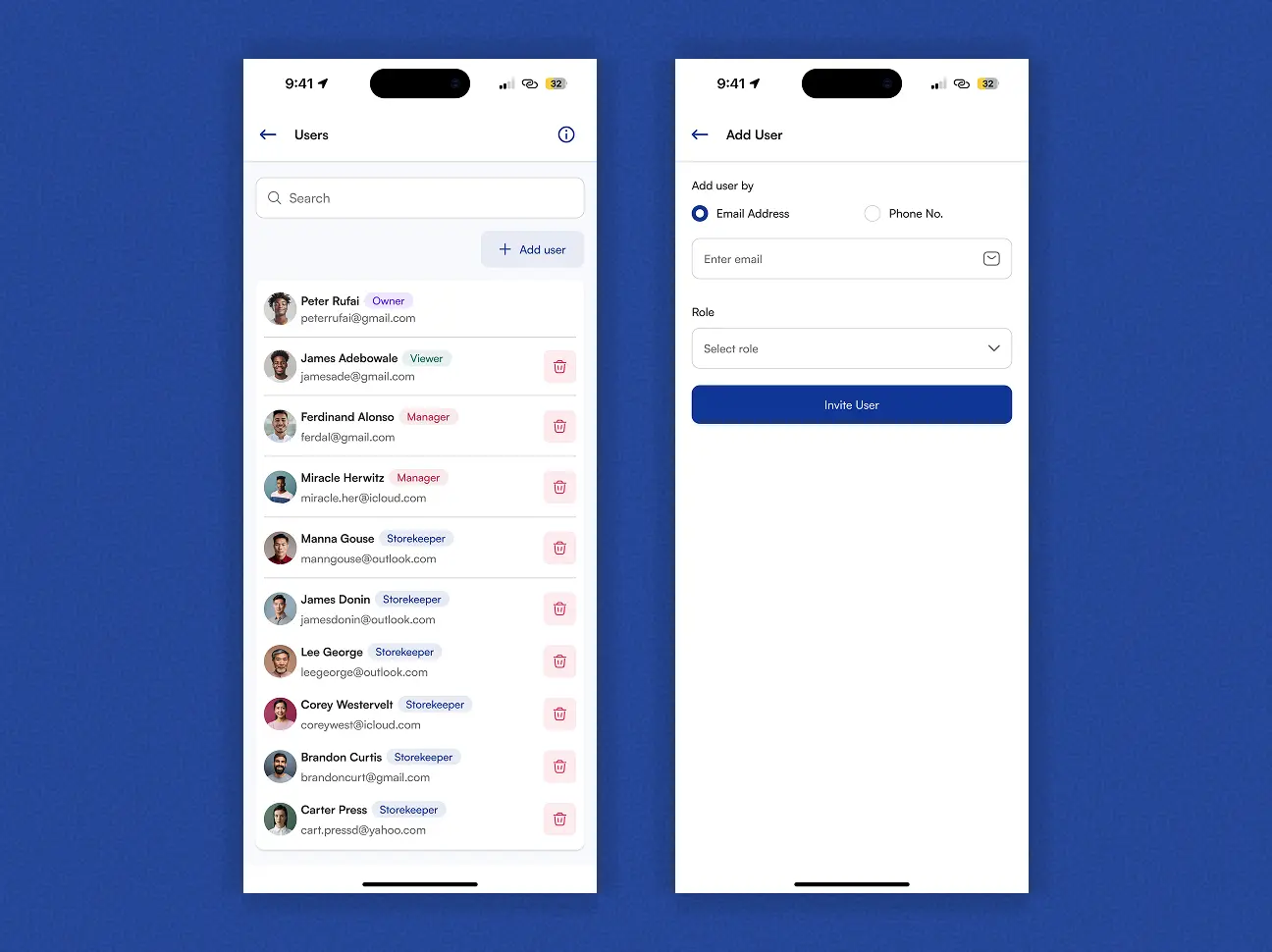
PRIVM supports Owner, Manager, Storekeeper, and Viewer roles so operational access can match responsibility. Team members can be invited and assigned a role during onboarding instead of receiving broad access by default.
The primary owner remains protected from removal, preserving administrative continuity while still allowing routine inventory work to be delegated across stores.
Designing for Everyday Operators
The product had to work for retail operators with different levels of digital confidence. I kept core actions direct, used plain operational language, maintained clear hierarchy, and avoided relying on color alone for high-risk states such as expiry.
Repeated patterns across stores, goods, team management, and reporting reduce relearning as users move through the product, while large primary actions keep frequent workflows easy to identify on mobile.
Shipped Product
PRIVM is now live on both iOS and Android. The released product carries the core system I designed: multi-store inventory management, transaction-driven stock actions, expiry monitoring, role-based team management, and financial visibility across retail operations.
Shipping the product moved the work beyond a concept case study and created a real product that can now be evaluated through actual retail use and future product data.