
CampusHub
Founder & Lead Product Designer
4 Months (MVP Design & Build)
Progressive Web App
Students + Local Businesses
MVP Built · Not Launched
Product Context
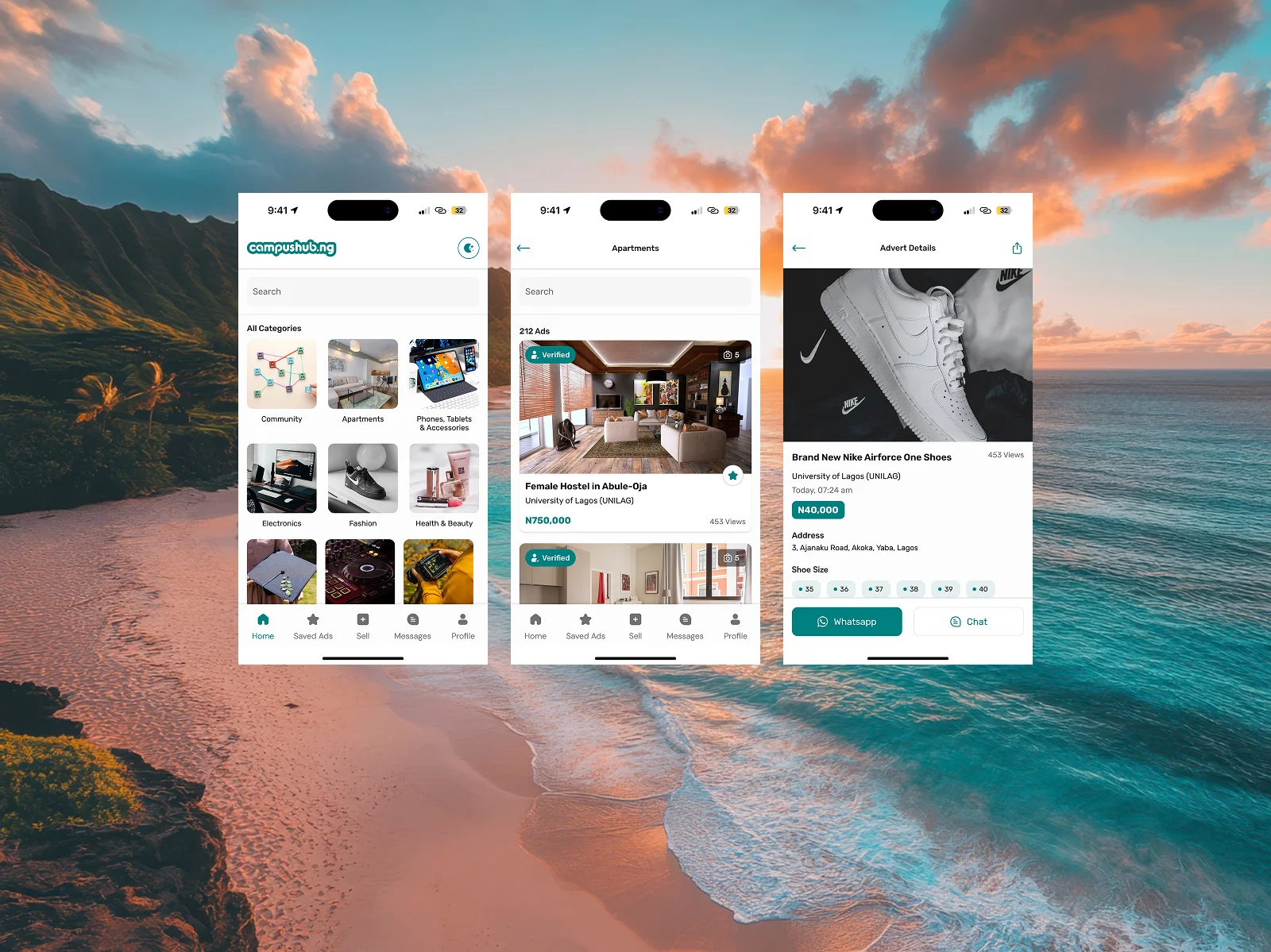
CampusHub is a campus-centered marketplace designed to reduce fraud, improve listing discovery, and introduce accountability into informal student commerce ecosystems.
The platform supports both students and verified local businesses operating around campus (e.g. housing agents, service providers).
I designed and built the MVP around the core marketplace journey: discovery, structured listings, contextual messaging, and identity verification. The product did not progress to a public launch, so this case study focuses on the product decisions, interaction design, and system thinking behind the MVP.
Design Challenge
Campus commerce largely occurs through WhatsApp groups, Instagram DMs, and informal channels.
These environments lack listing structure, credibility signals, transaction context, and accountability systems.
Students face frequent fraud risks, while legitimate local vendors struggle with visibility and trust.
Key Product Decisions
Hybrid Verification Model
Student accounts verified via institutional email. Local businesses verified via documentation and profile review.
Category-Based Listings
Structured categories for goods, services, and housing reduce search friction.
Listing-Tied Messaging
Conversations are linked directly to listings, preserving context and reducing ambiguity.
Ad Lifecycle States
Active, Draft, Under Review, Hidden, and Declined statuses introduce moderation transparency.
Product Showcase
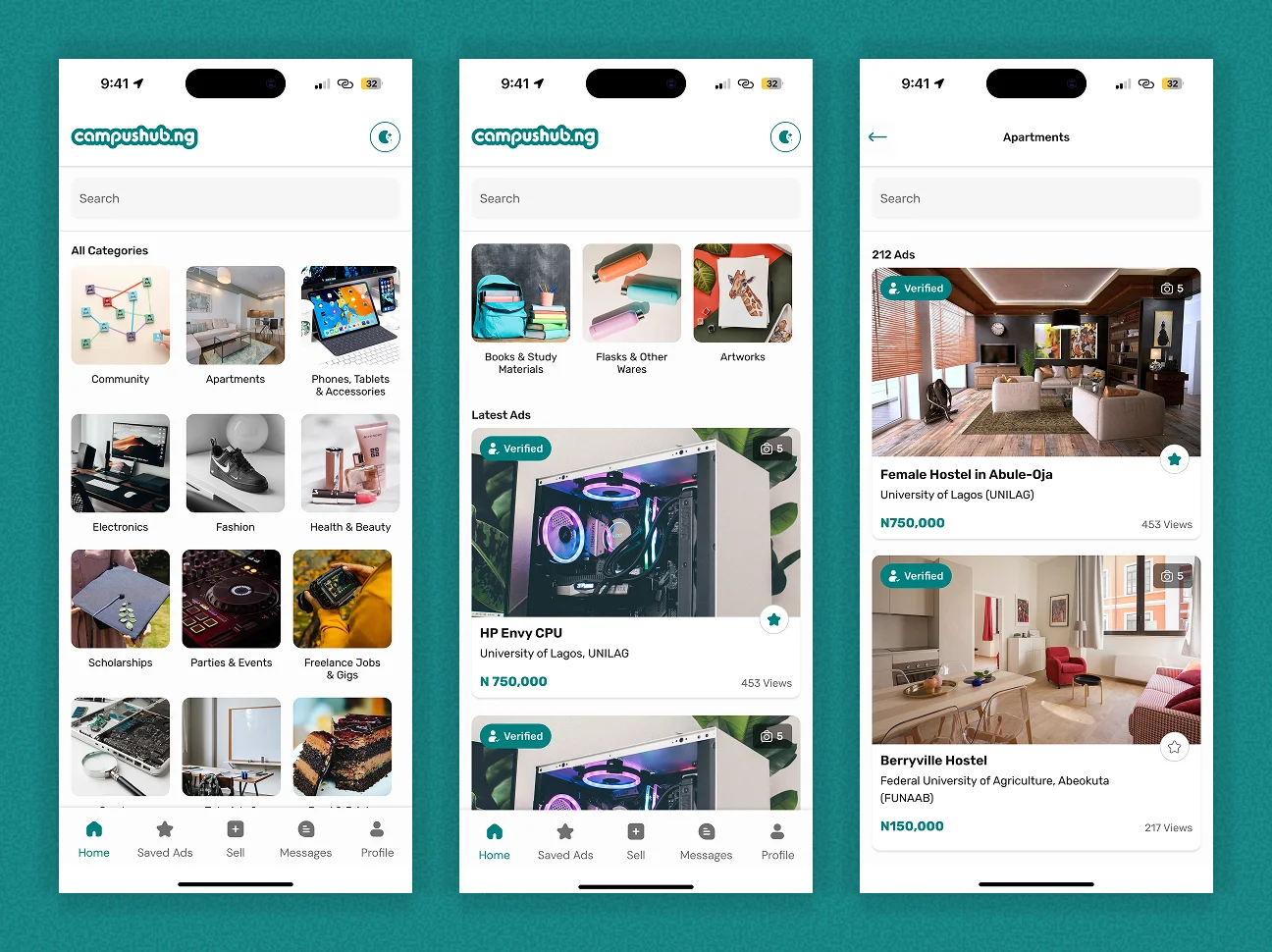
CampusHub was designed as a mobile-first progressive web application with structured listing systems, contextual messaging, and visible trust indicators embedded directly into the interface.
Home Feed & Category Navigation
Structured listing feed with filtering by category (housing, goods, services). Designed to reduce discovery friction compared to WhatsApp-based commerce.
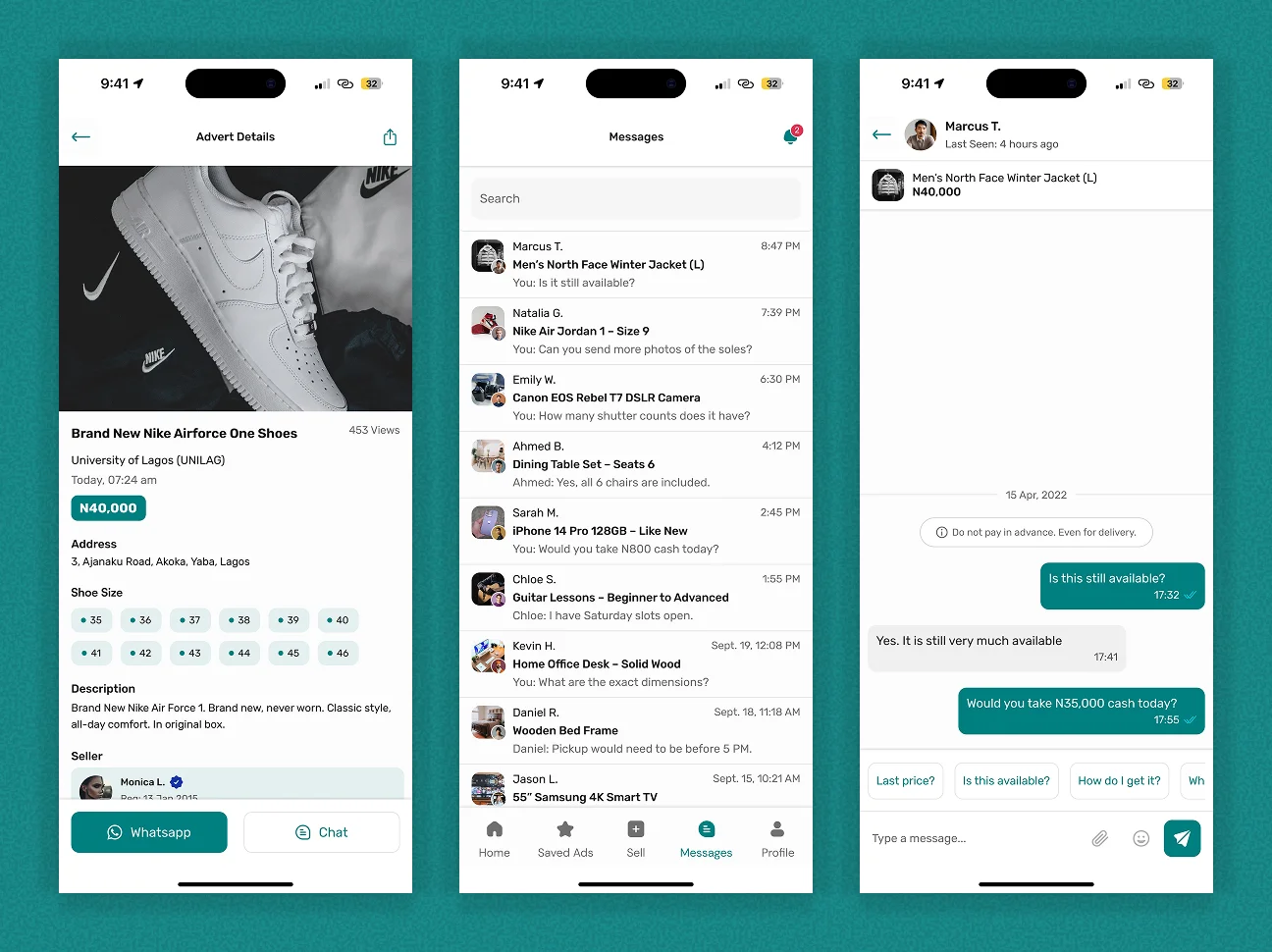
Listing Detail & Contextual Messaging
Each conversation is tied directly to a specific listing, preserving transaction context and reducing ambiguity in negotiations.
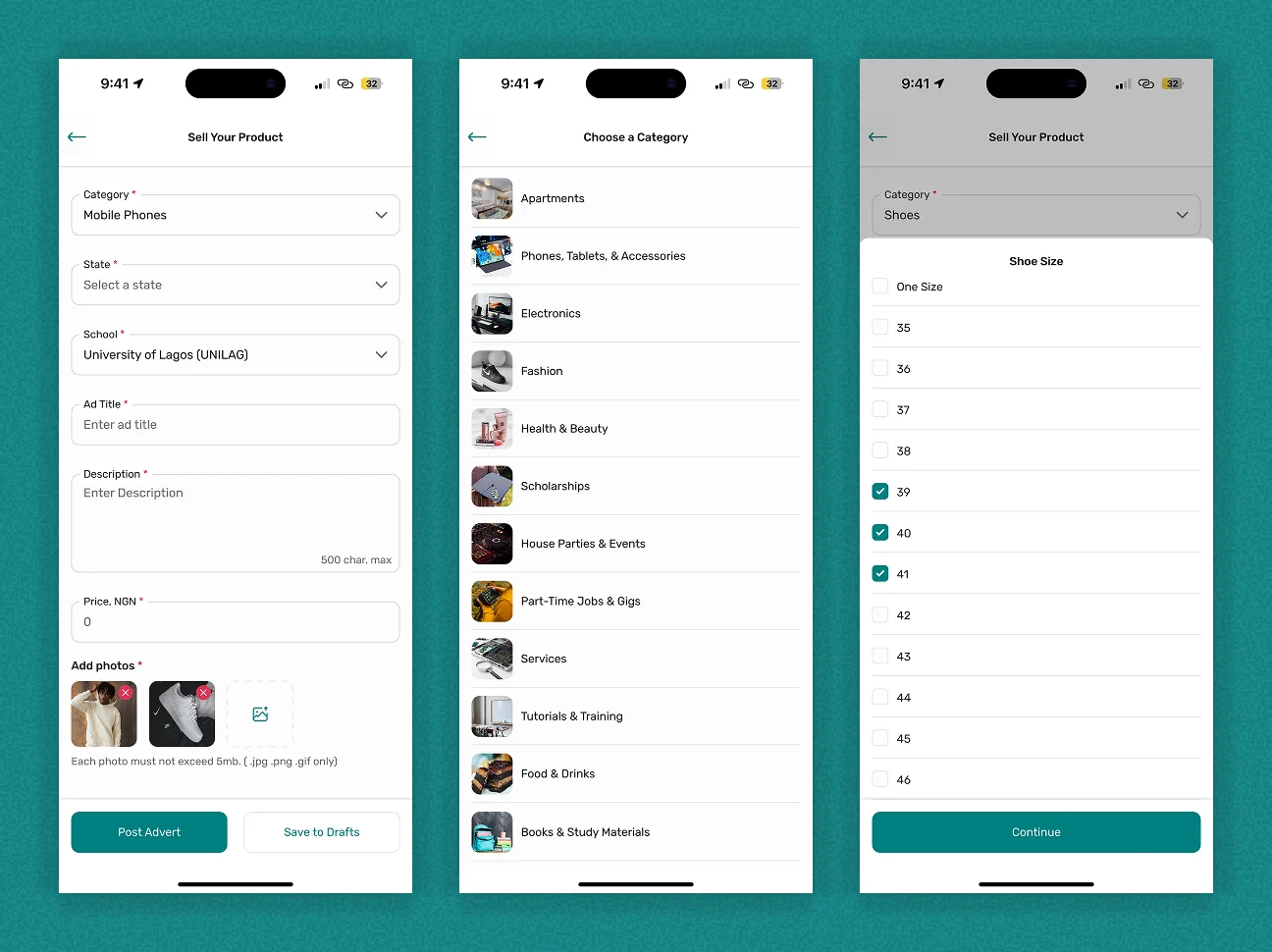
Create Listing Flow
Streamlined posting system with structured inputs, pricing controls, and moderation-aware lifecycle states.
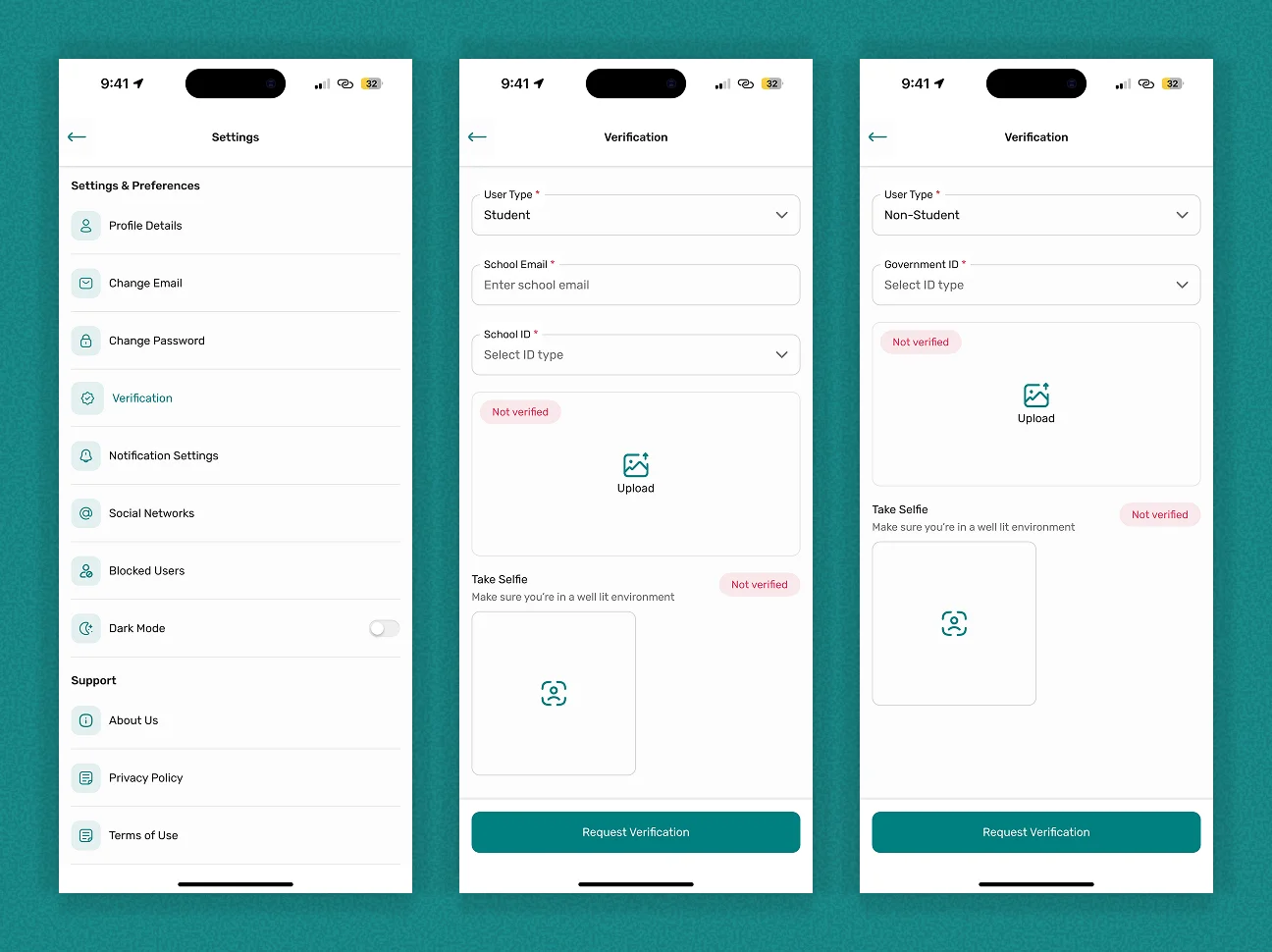
Hybrid Verification Model
Multi-step identity verification differentiates user types: students confirm institutional email, school ID, and selfie; non-students verify with government ID and selfie — embedding visible trust into every interaction.
What I’d Validate at Launch
Listing Activation
Measure how easily new users move from sign-up to creating or engaging with their first listing.
Discovery to Conversation
Track whether category navigation and listing detail pages successfully lead buyers into meaningful seller conversations.
Trust & Verification
Evaluate whether visible verification signals increase confidence and whether the verification flow creates unnecessary drop-off.
Marketplace Liquidity
Monitor whether each campus can sustain enough active listings, buyers, and sellers to make the marketplace useful without relying on broad geographic scale.
What I Learned
Designing for semi-closed ecosystems requires balancing openness (local business access) with visible trust layers.
Designing the MVP made the cold-start problem especially clear: marketplace quality depends not only on good UX, but on reaching enough supply and demand within each campus community.
If revisited, I would launch narrowly within one campus, validate the trust and liquidity assumptions with real usage, and expand only after the marketplace shows repeat activity.